A day wandering through Munich’s old town with my nephew
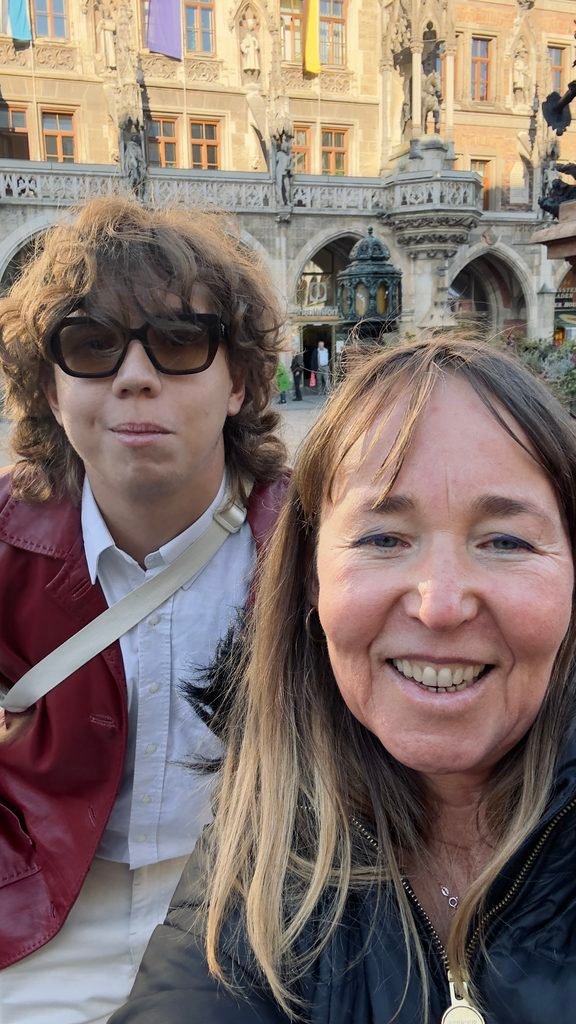
In this post, I will take you around Munich’s old town in Bavaria. I spent a day in some of the old town’s areas with my nephew Elias while he was on the Erasmus programme at the nearby university in Regensburg.
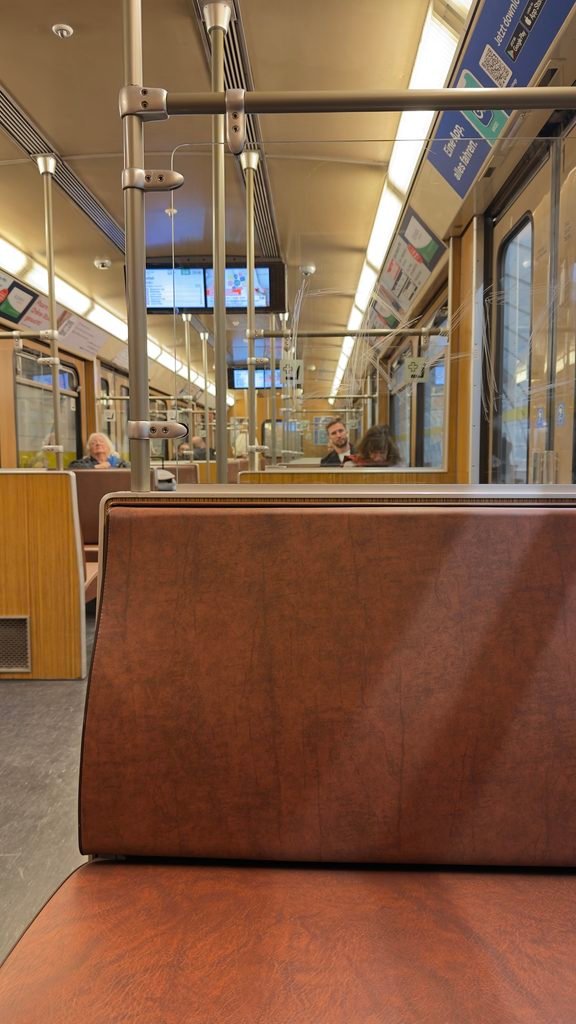
I was staying at a hotel on the outskirts of the old town and decided to take the tram. When I arrived at the tram stop, there were a few tracks, but I was unsure which side I should wait on. There was a parked wagon that didn’t seem to be going anywhere. I decided to wait on the other side. I only had to look at the tram leaving to realise I had chosen the wrong side. I had to wait another 8 minutes for the next one. It was sunny that day, so it didn’t matter that much.
When I arrived in the old town, I had a strange experience. I was looking for breakfast somewhere, but wanted to avoid the chain shops at all costs. I would not set foot in a Starbucks while in Munich. I asked Google Maps to help me find a coffee shop that would also serve eggs for breakfast. I found one called Bar Centrale. I was not sure I wanted to enter; it felt very intimate. I wondered if that was a place only for locals.
I walked by in front of it a few times until I finally decided to push the entrance door. It was like I was in another country. Somewhere in Italy, I fell in love with the place at once. The walls were covered in acajou wood panelling, and the floor was tiled with terrazzo white tiles. On the bar was a window shelf with croissants marmalata . The place in the first room was small, but they had a larger room at the back. I opted for a table near the window with 4 seats that was the only one available. I was completely gobsmacked by that place. It was like receiving a message from the universe that Italy was calling me. ( I still have this idea of buying a one-euro house in Italy, but I haven’t put my plan into action yet. Maybe this was a sign?)

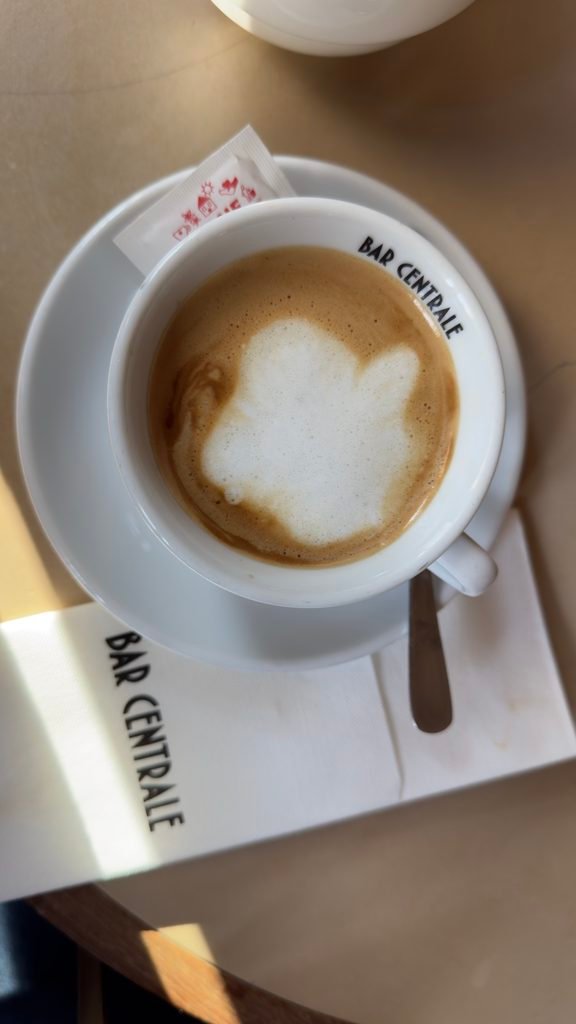

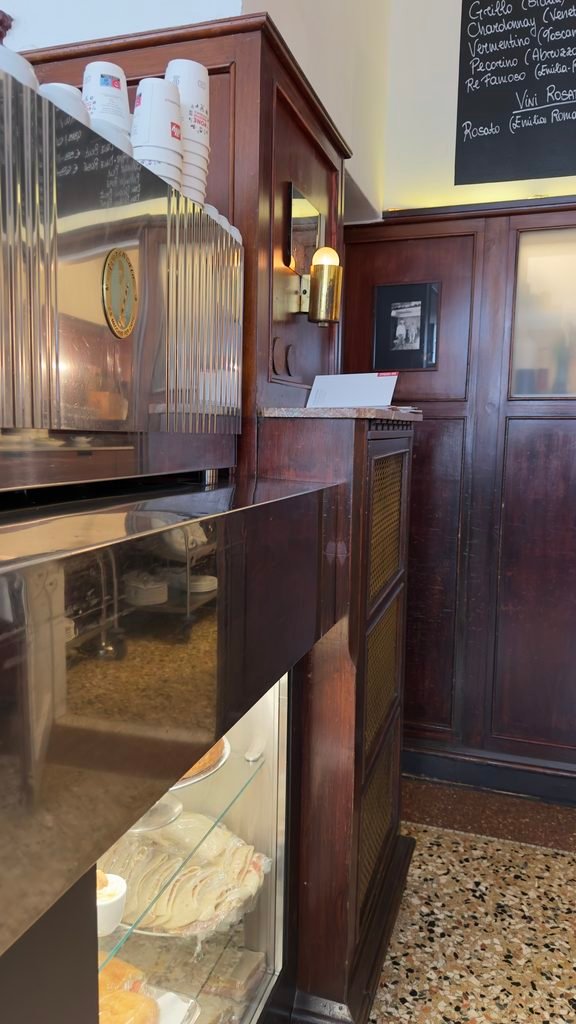

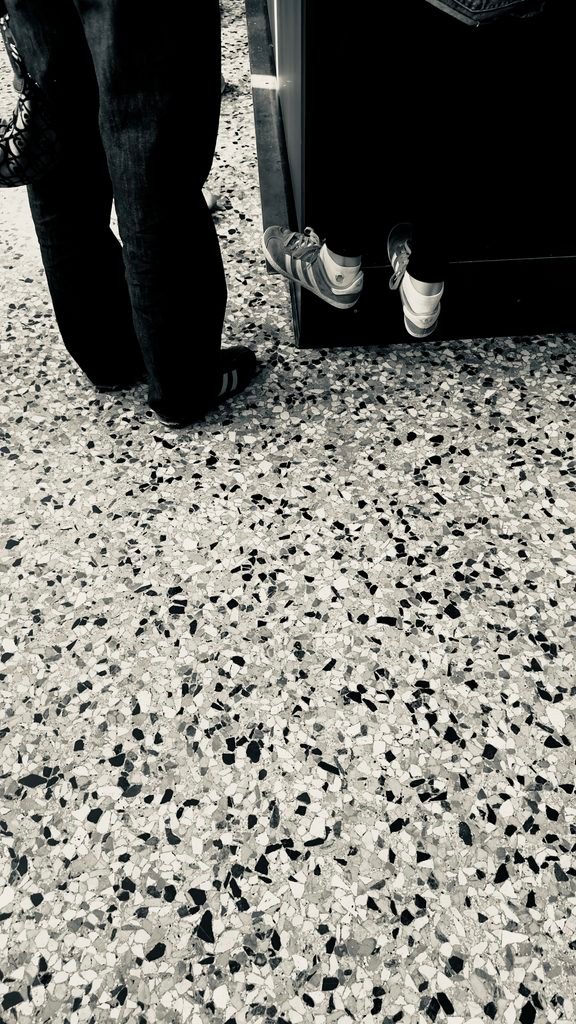
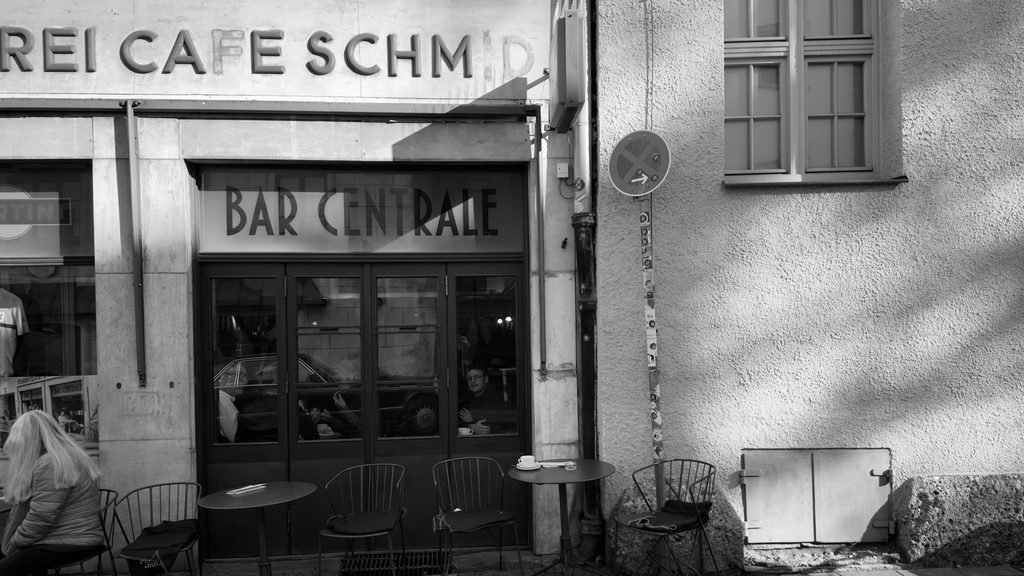
I had a lovely breakfast with sunny-side up eggs and a cappuccino. I managed to order a second cappuccino before three other people took over my table. They were well-dressed and stylish. I figured they were architects meeting in town. I pretended not to understand German and tried not to listen to their conversation, and decided it was time to leave and start my tour of the old town, where I met up with Elias.
Marienplatz
Is the heart of Munich and the main square in the city. Like in Salzburg, the statue in the middle is the Mariensäule (St Mary’s column). A column topped with a golden statue of Mary standing on a crescent moon.
Das Neue Rathaus (New Town Hall)
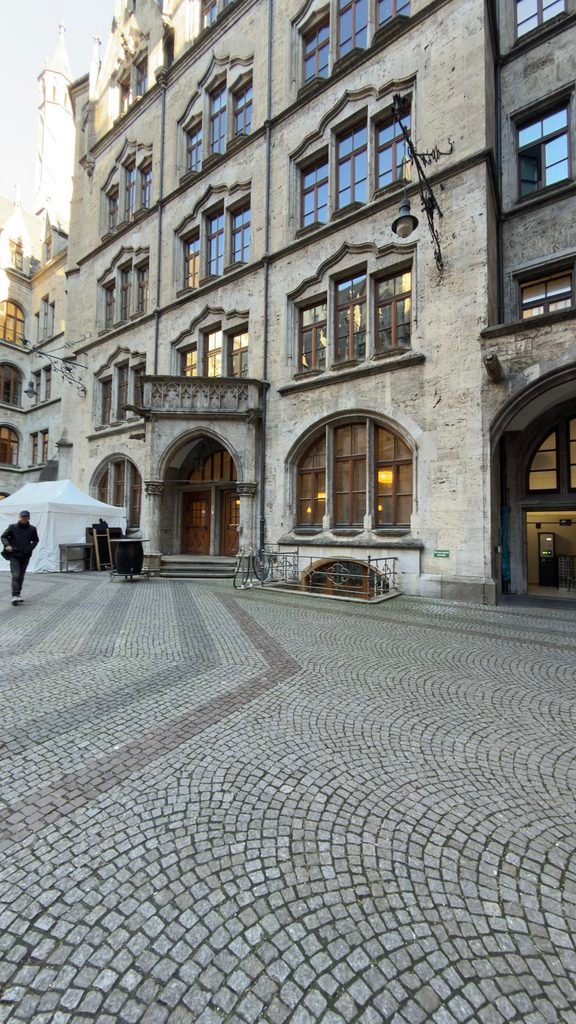
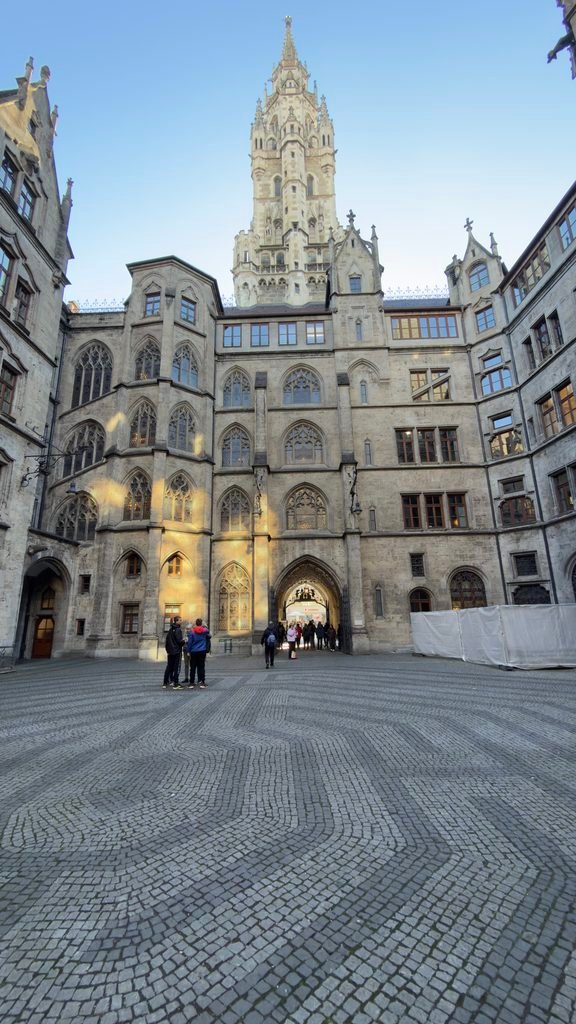
On the square, you will also find das Neue Rathaus (the town hall). Built between 1867 and 1909 in a neo-Gothic style. The facade occupies the entire square on the long side. This is where the city’s Mayor is located, and it is also the place to celebrate Bayern Munich’s victories.
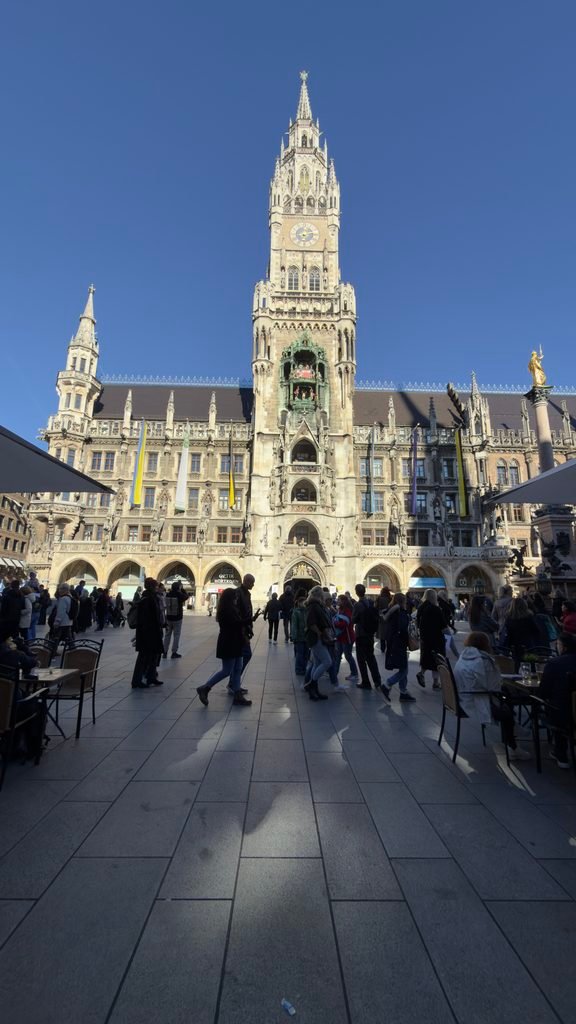
Glockenspiel
They installed a large mechanical clock in 1908. It has 43 bells and 32 life-sized figures. They tell two stories from Munich’s history. One is the wedding of Duke Wilhelm V, and the other is the Cooper’s dance. To see the figures move, you can watch them every day from 11 am to 12 pm between March and October. I didn’t have that opportunity as I was in Munich in November.
The Medieval Districts
The town is divided into four medieval districts: Hackenviertel, Angerviertel, Kreuzviertel and Graggenau. I focused my time on Kreuzviertel and Graggenau.
Graggenau
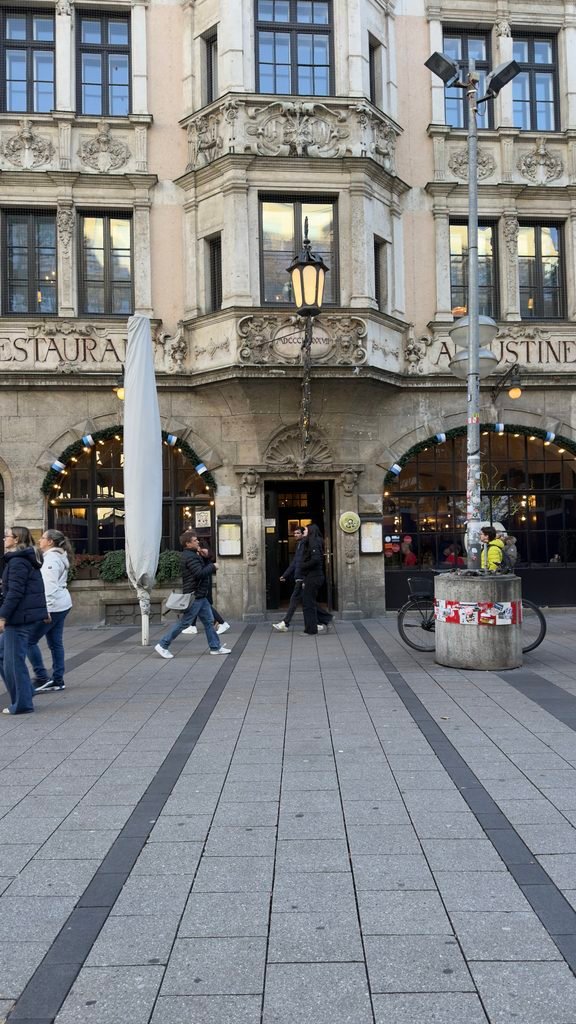
It is one of the most visited areas in town; here you will find the Residenz and Marienplatz. This is also where you will find one of the oldest breweries in Munich, the Hofbräuhaus, founded in 1568. There’s quite a lot of history behind these walls. Lenin was a visitor during the communist party meetings. The Nazi Party would hold their meetings in the beer hall. Later, John F. Kennedy and George W. Bush visited the brewery.
Odeon Square
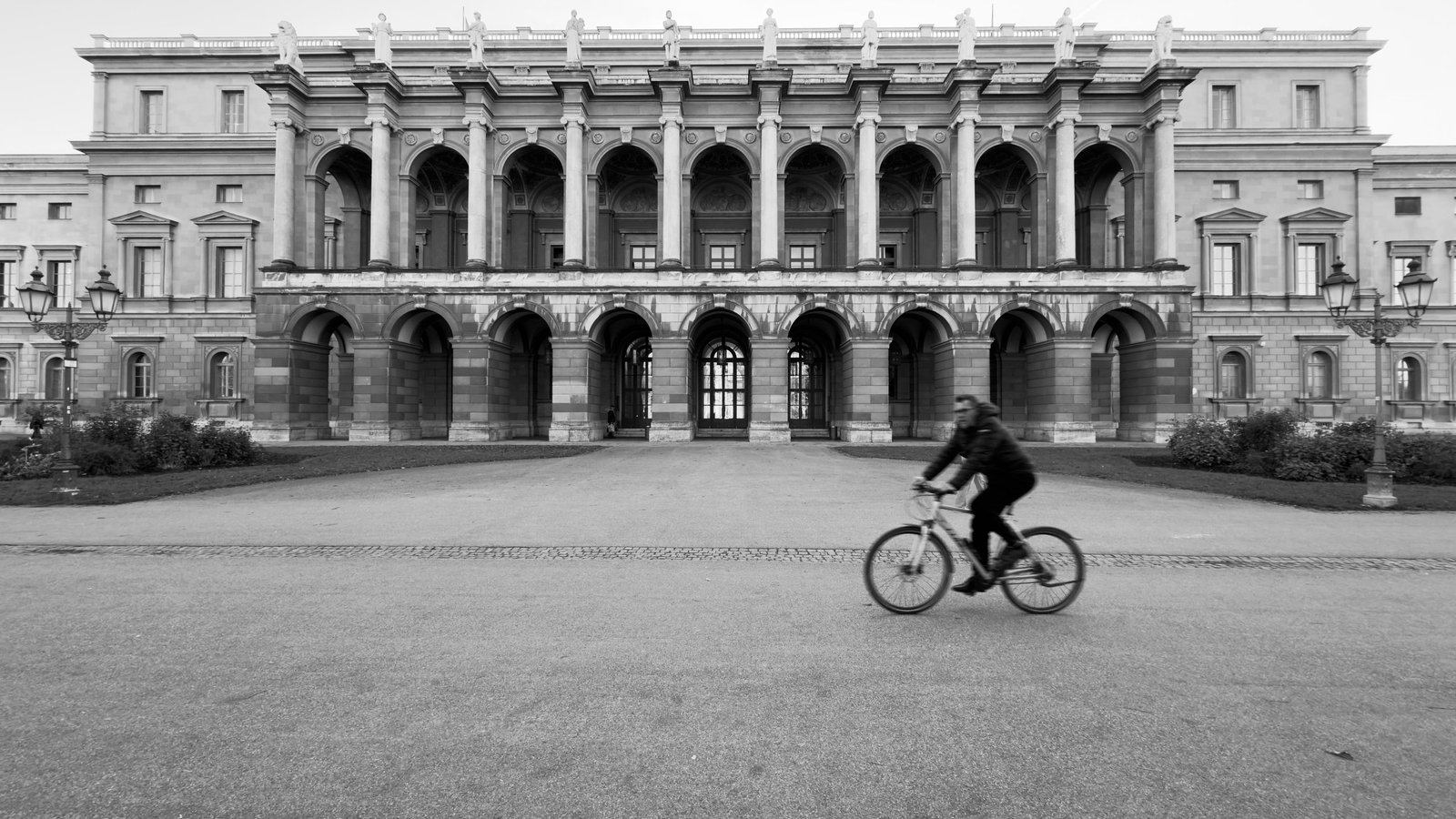
An Italian Renaissance inspiration with neo-classical buildings. On the south side, you will find a loggia called the Feldherrnhalle (Field Marshal’s Hall). The building is a replica of the Loggia dei Lanzi in Florence. Ludwig II dedicated it to the Bavarian Army. In 1923, it was also at the heart of the battle that ended Hitler’s putsch. Two policemen died, and a memorial stands opposite the building. The building is currently undergoing restoration work until 2028.
The Theatine Church
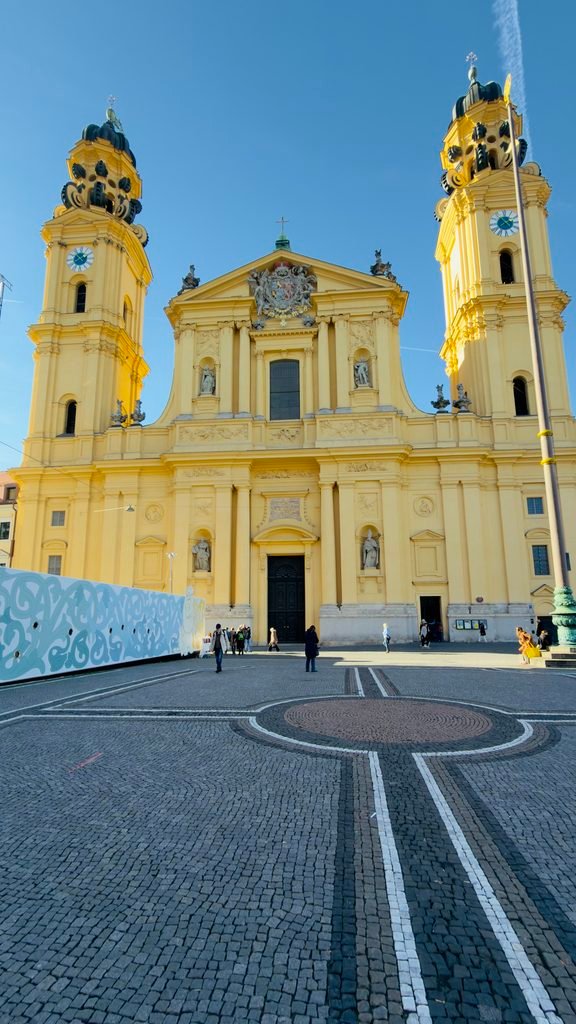
When the long-awaited heir to the Bavarian throne, Max Emanuel, was finally born in the mid-17th century, Elector Ferdinand Maria and his wife Henriette Adelaide wanted to mark the occasion. Their gift of gratitude to the city was a commission for a church of unrivalled beauty and splendour, designed by Italian architects and modelled on Rome’s Sant’Andrea della Valle.
The result was the Theatinerkirche, a landmark not only for Munich but for all of northern Europe. Completed between 1663 and 1688 by Agostino Barelli, Antonio Spinelli and Enrico Zuccalli, it stands as the first Late Baroque building of Italian inspiration to rise north of the Alps. Its ornate façade was shaped by the Cuvilliés family, father and son, while the sculptors Roman Anton Boos and Ignaz Günther brought the figures to life.
Kreuzviertel
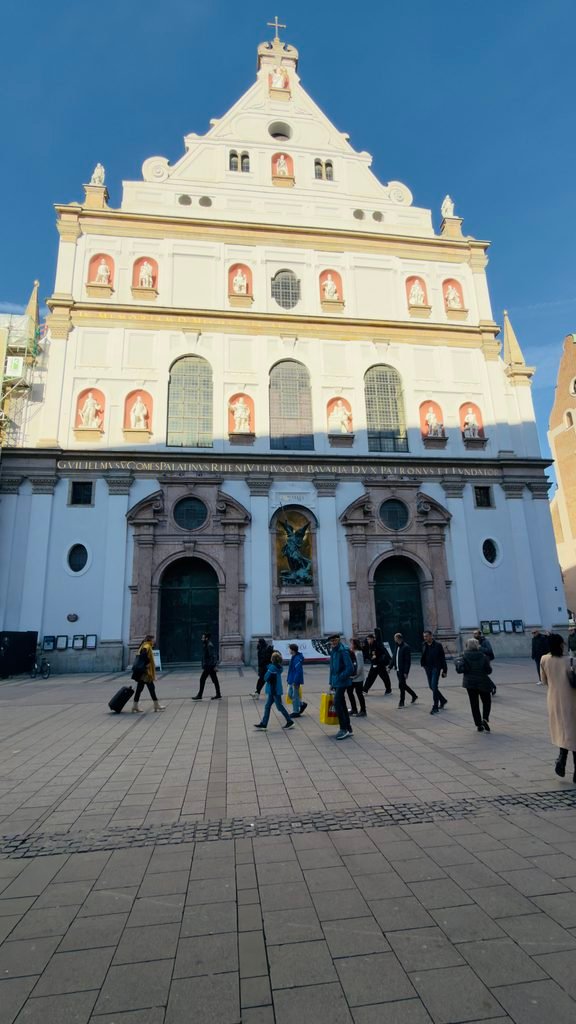
It was Munich’s spiritual centre. It included the Jesuit Monastery, the Carmelite Monastery, and St. Michael’s Church. It was also the area where salt was stored in the 16th century, making Munich a rich city. A little away from the main tourist centre, and great to wander.
Frauenplatz and Frauenkirche
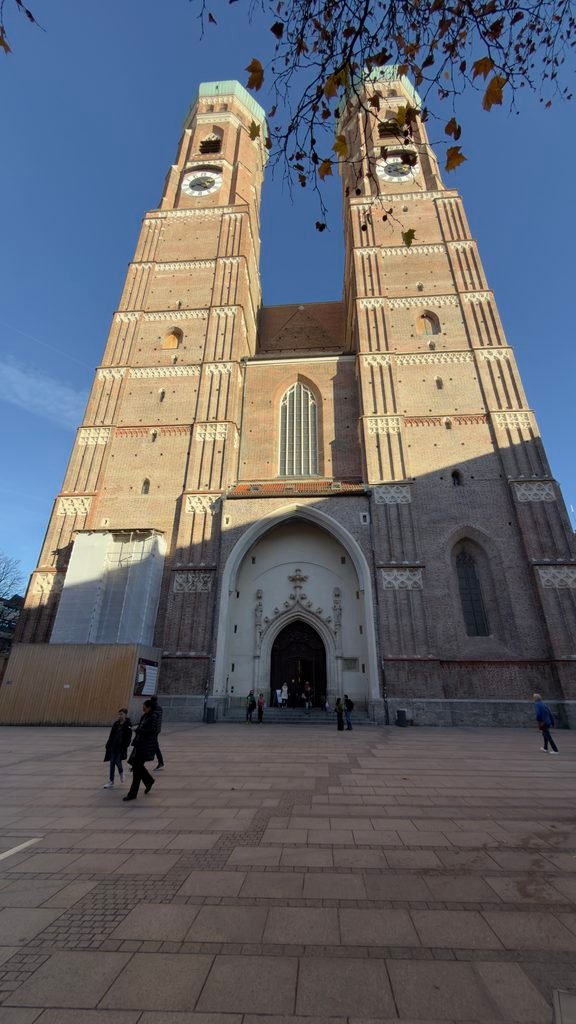
On Frauenplatz square stands the famous Frauenkirche. Its two towers reach 98.57 metres high. The church was built in the 15th century by Jorg von Halsbach. The colour of the church is due to the brick from a nearby quarry.
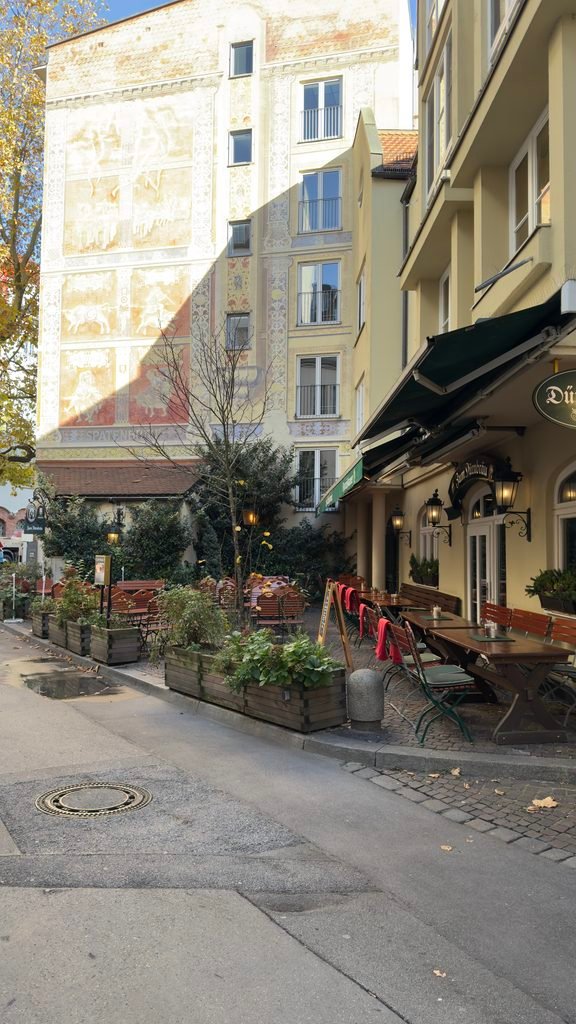
Elias and I decided to have lunch in a typical Bavarian restaurant; we chose one in Graggenau called Zum Dürnbräu. Growing up in a region of France that shares a very strong cultural bond with Germany, I felt as if I were stepping back into Alsace. I used to love these typical restaurants with dark wood panelling and a tinge of beer and cigarette smoke in the air. In a corner was a group of old men gathering for their daily meet-up. It made me think of the typical Stammstisch (a friendly, informal gathering that meets regularly), I would find in my parents’ town cafés. All that was missing was the cigarette smoke in the air. Even the German intonation reminded me of the local Alsatian dialect they used to speak. It brought a hint of nostalgia because I’m not sure there are many places like this in Alsace anymore.
Lunch was Bavarian food. I had a Tafelspitz, a beef casserole in brown sauce. It came with vegetables and potatoes. That also transported me back to my childhood and my mum’s cooking.
The Munich Residenz and Garten
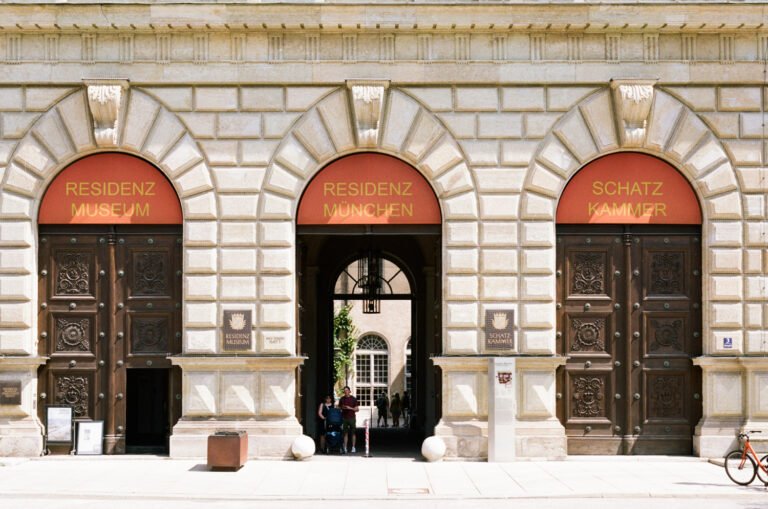
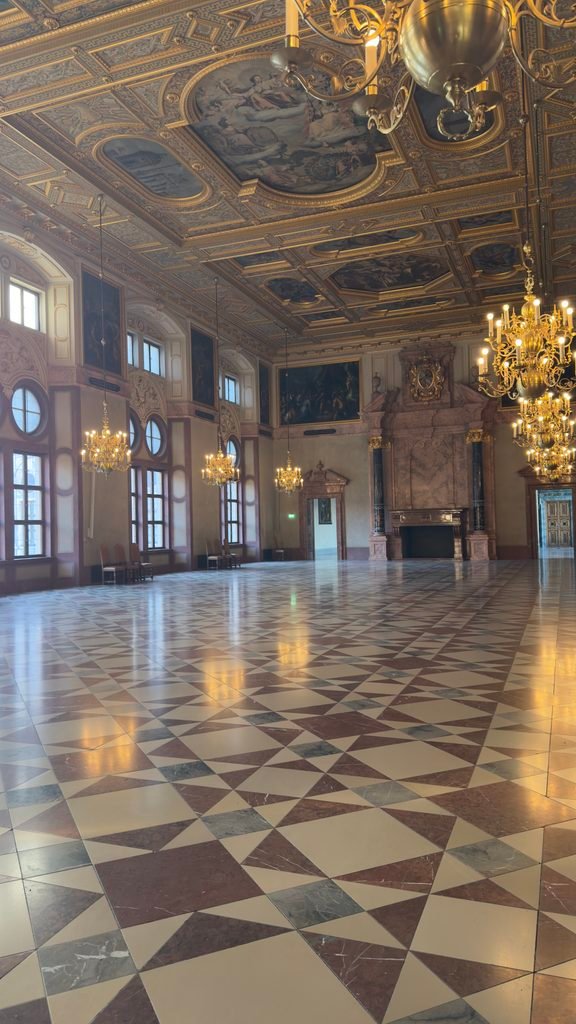
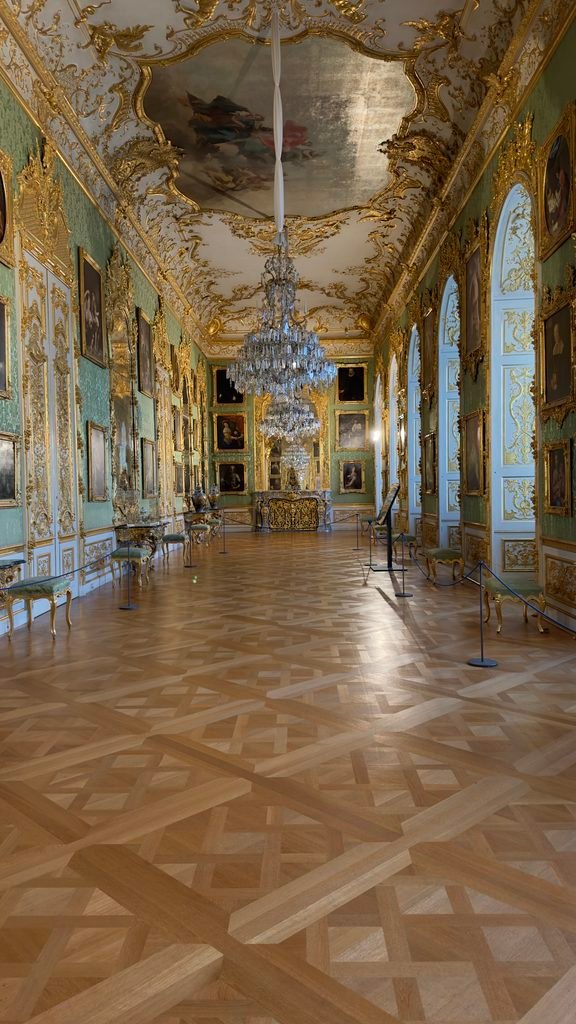
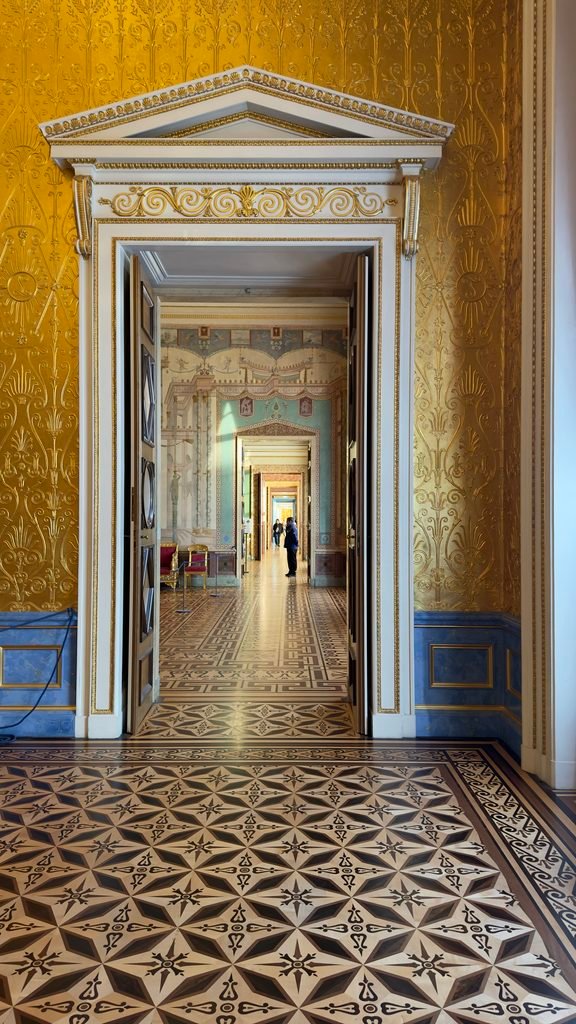
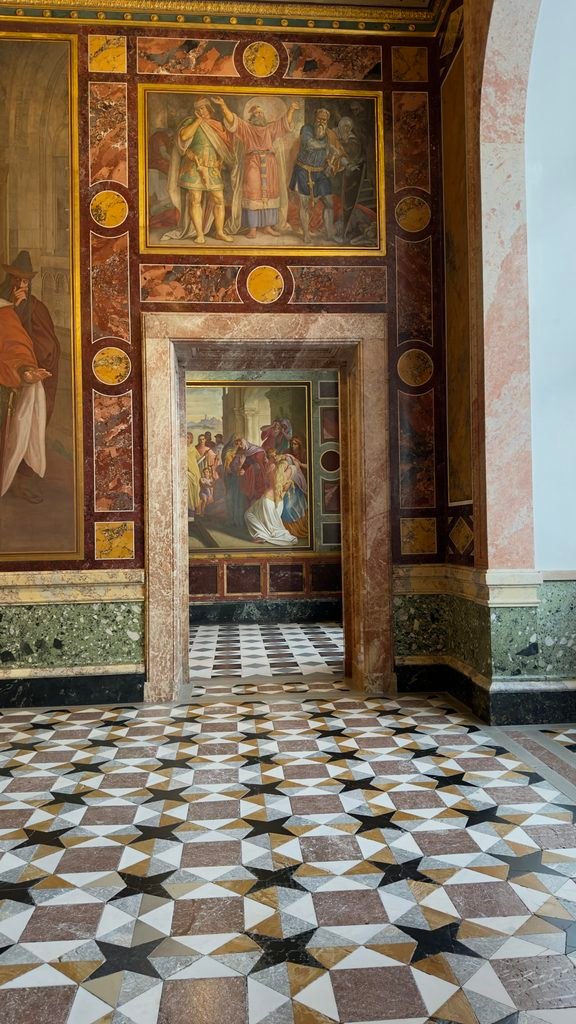
After lunch, we decided to visit the Residenz. I was delighted that Elias wanted to visit one of the museums. The Residenz was the home of the Wittelsbach Dukes of Bavaria’s government between 1508 and 1918.
This palace is an impressive building with 130 rooms and courtyards. The style is Baroque and Rococo. I was completely stunned by the place. The palace, which was damaged during WWII, was mostly rebuilt.
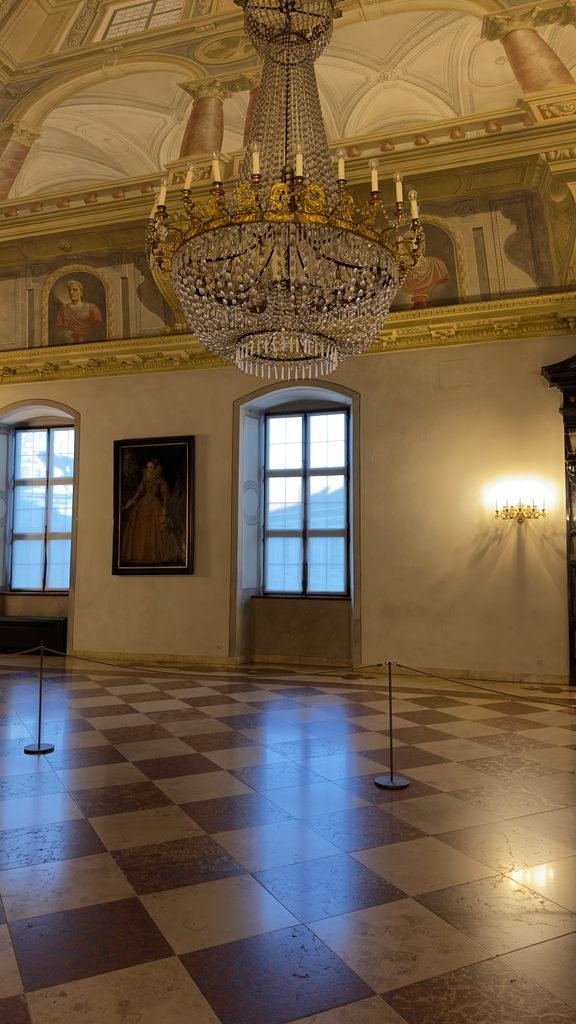
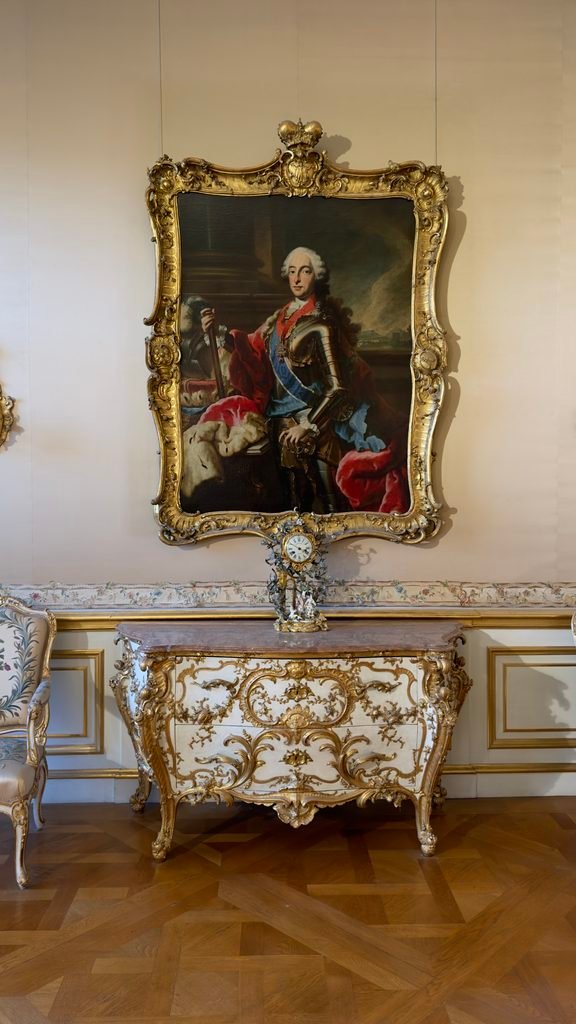
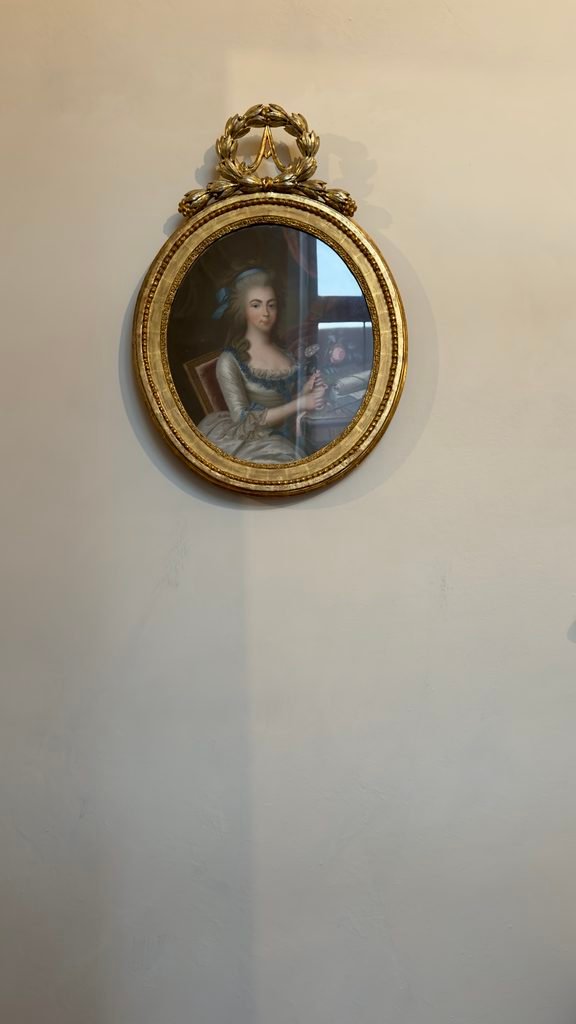
You don’t have to visit all the rooms and can choose a shorter circuit. Despite choosing one of the shorter routes, our journey in the Residenz lasted nearly two hours. I loved walking across the beautiful tiles and wooden floors in the palace’s rooms, looking at the paintings and the windows in the courtyard while I moved from room to room.
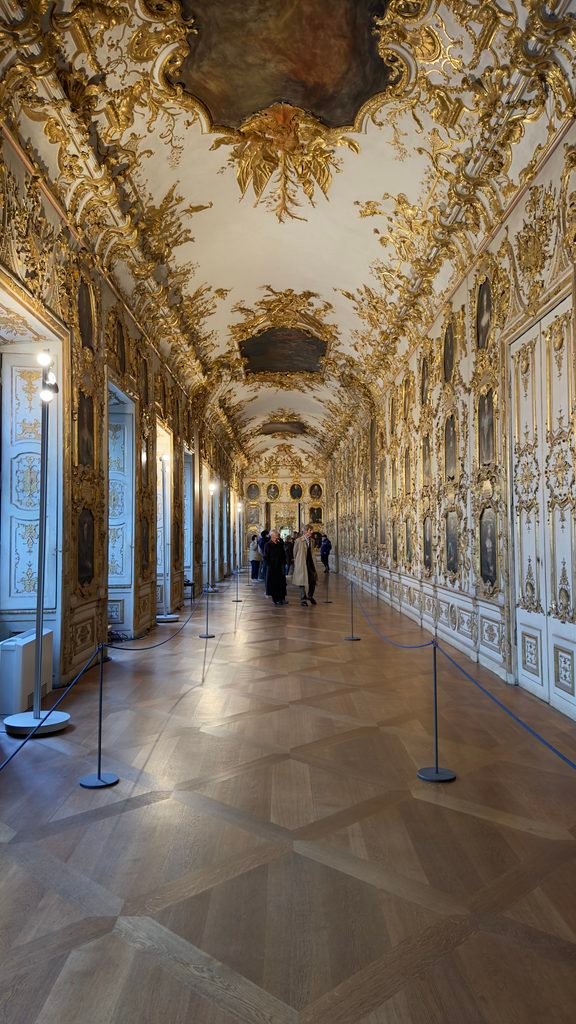
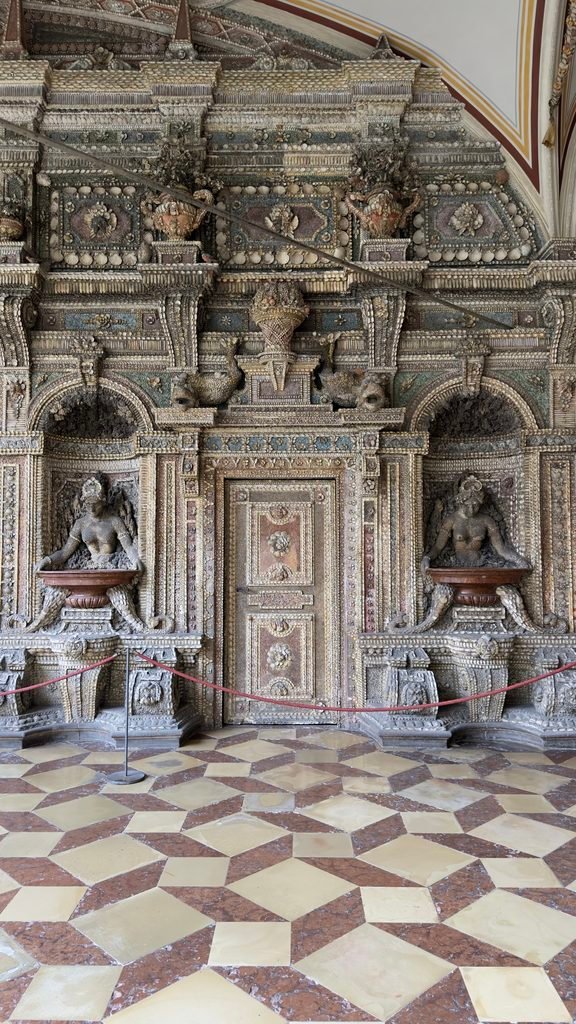
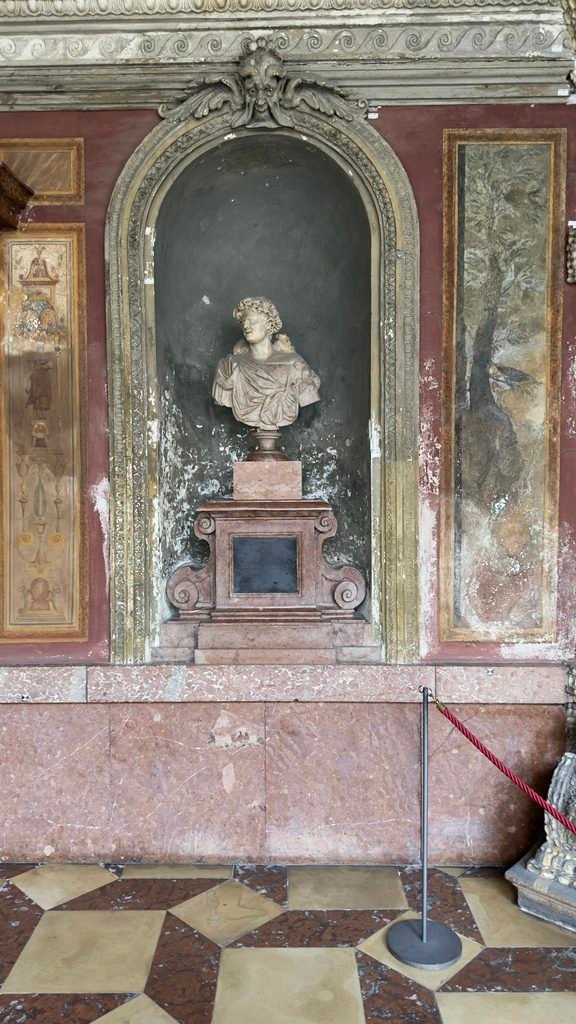
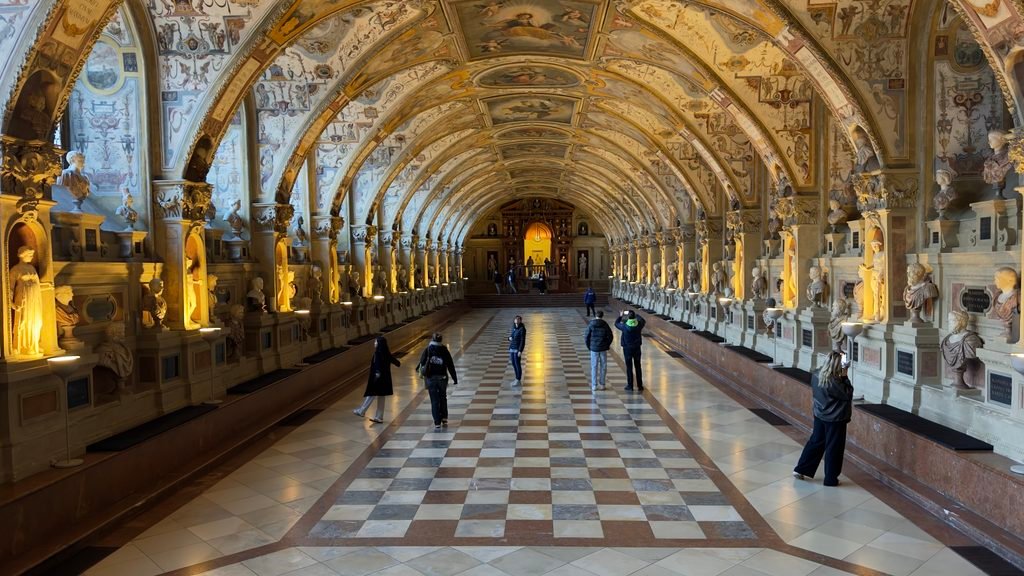
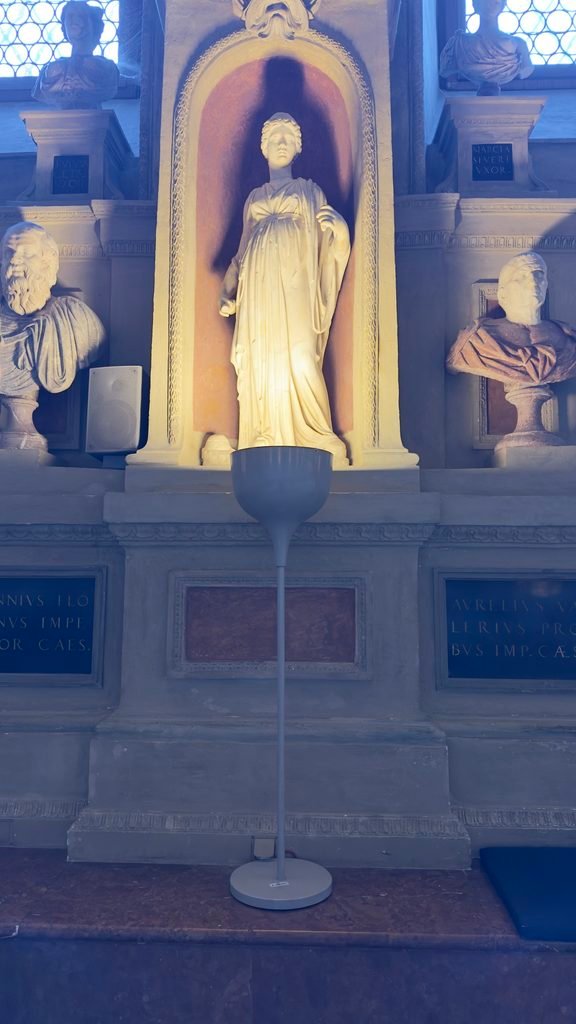
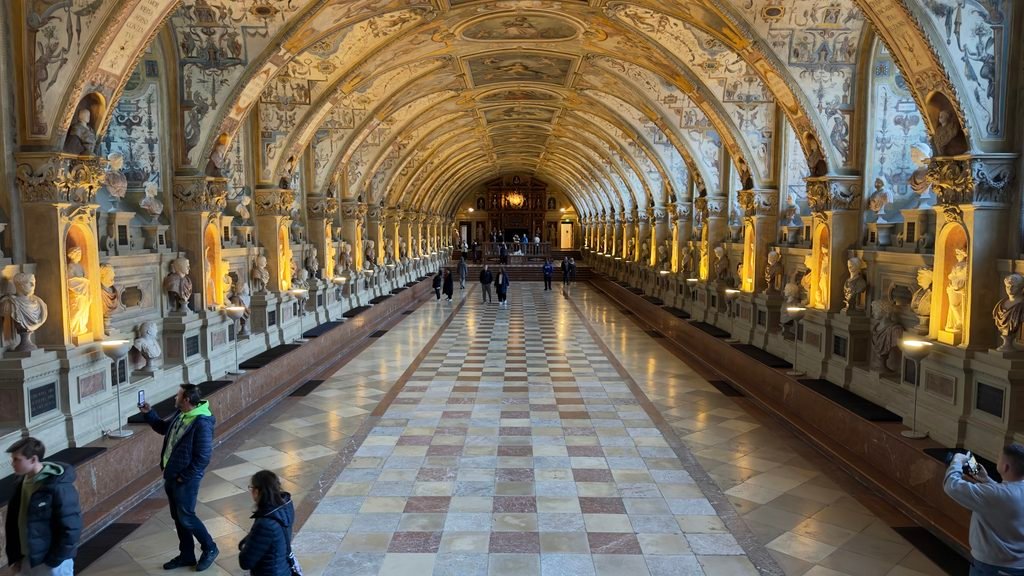
The most beautiful room is the Antiquarium in the Grotto Courtyard. It’s the oldest room in the Residenz. Stepping in feels like entering the Mirror Room in Versailles, though I haven’t been there in ages. Upon entering, the decor and stunning architecture will blow you away.
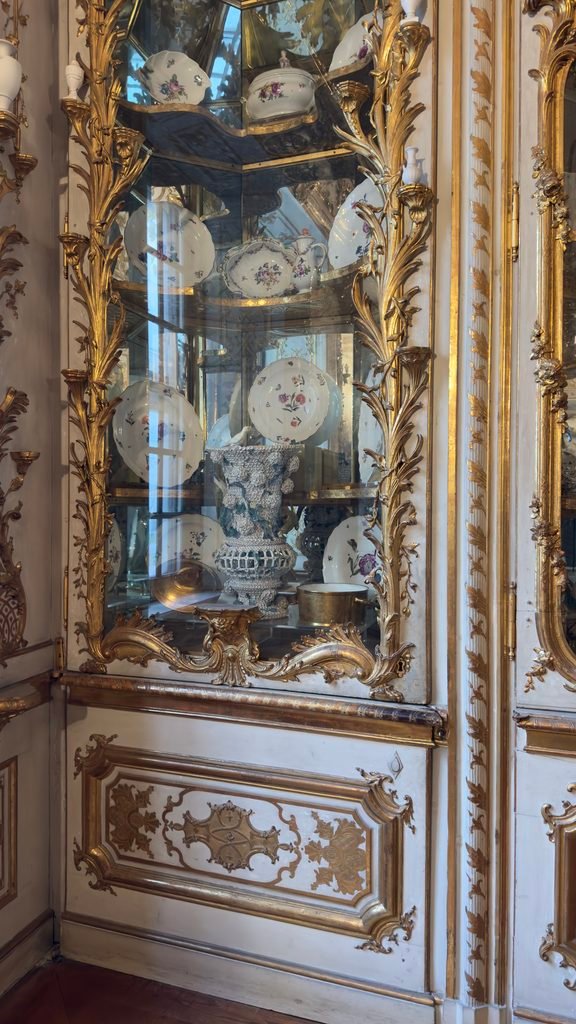
This room hosted banquets and parties for Duke Wilhelm V and his son, Maximilian I. It has both baroque and neoclassical styles. At first, it can feel overwhelming. But compared to the emptiness of modern architecture, I welcome the over-the-top decoration and paintings of Peter’s Candif workshop; it feels like entering someone’s house rather than a clinic. Probably not a room I would like to live in, but could certainly take inspiration from. I definitely want more baroque style in my home.
The Hofgarten (Court Garden)
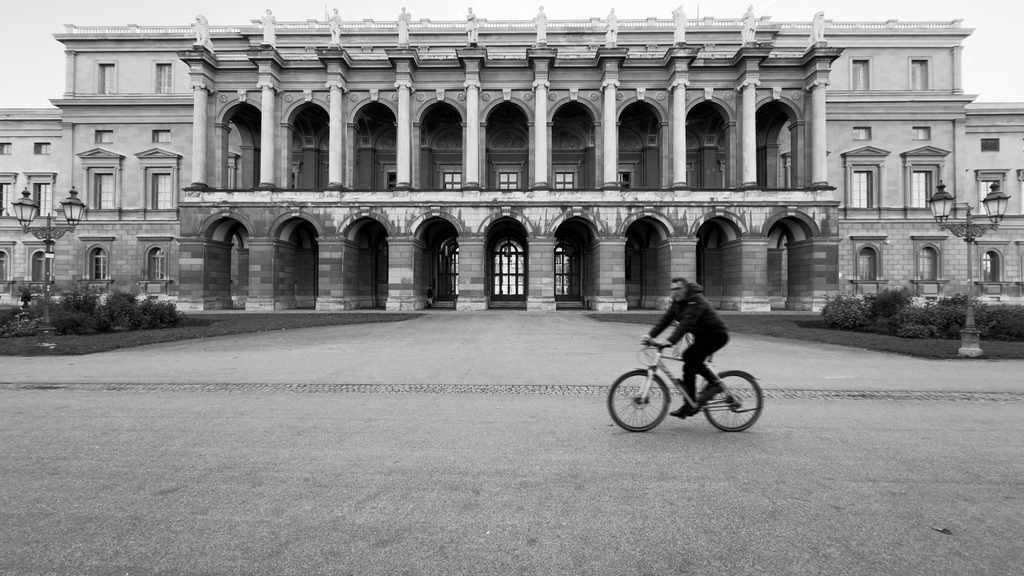
A palace built in Italian Renaissance style gardens by Maximilian I between 1613 and 1617. At the heart, you will find the pavilion dedicated to the Goddess Diana. It’s free to wander in the gardens.
That day in Munich was a nice surprise. I was delighted when my nephew suggested visiting the Residenz, although he thought the tour was too long. We had a lovely day together, and through this post, I’m inviting you to spend time with your family and loved ones. Nothing beats moments like these.
I hope you have enjoyed this tour of Munich, a city I was not really prepared to explore, but I’m glad I made the effort. Munich has a lot more to offer, and if you’re staying for a few days, I would recommend extending your tour to the English Gardens and beyond.
PS.Thank you for being here. Your likes, shares, comments, and messages mean everything
If you liked this post you might also like
-
Munich city tour and photo walk during summertime
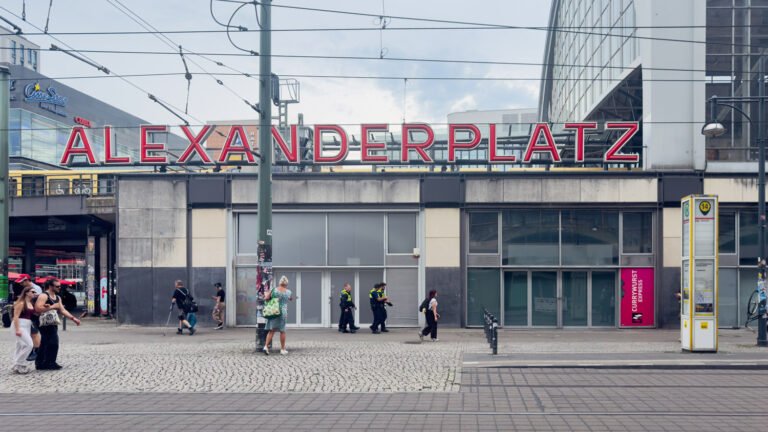
I went back to for another Munich city tour this summer I had a completely different feeling. Travelling to Munich after a few days in Berlin (you can read the post here), I found my stay there felt more like being on holiday, with life unfolding in the “gemuetlich” (quieter) way. In this post, I will take you on a summer-bound photo walk of new and old places in Munich, where I share 10 of my favourite spots to photograph in the old town.
-
On a 72 hours tour of Berlin rediscovering old and new places
In this post I take you on a tour of Berlin, this was my fifth visit and gave me the opportuniy to visit places like Prenzlauer berg and Wedding. Join me on this visual tour of this amazing city.
-
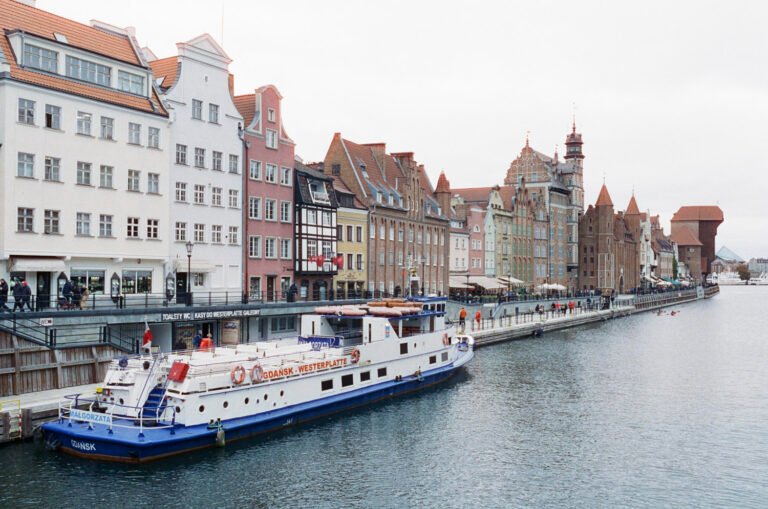
Gdansk my first encounter with Poland and it blew me away
I set my trip to Poland to three cities: Gdansk, Warsaw, and Krakow, travelling by train from Marseille. Gdansk was the first city I wanted to visit. Why Gdansk?
-
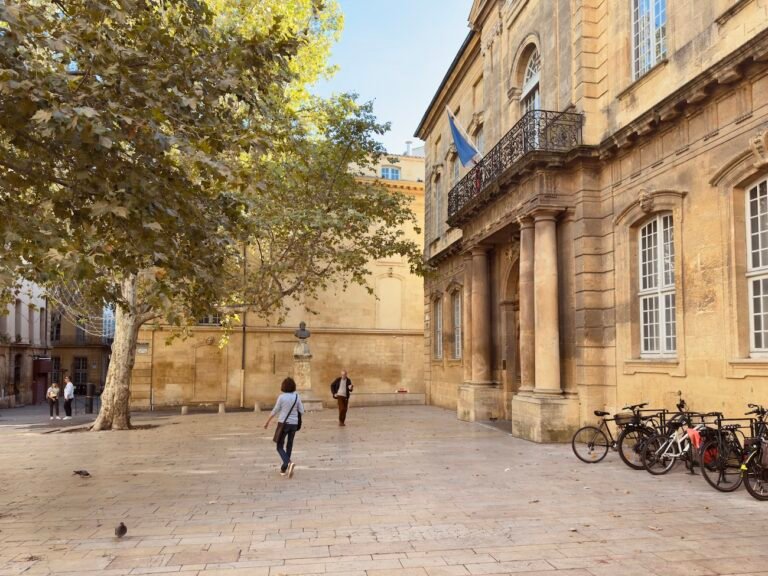
Aix-en-Provence a guide to the Provence town you do not want to give a miss
In this post I take you at the heart of Provence to Aix-en-Provence.
-
Puglia in a Week: Beaches, Baroque, and Culinary Delight
In this post I take on around Puglia all done on public transport with no cars. I’m sharing my most favourite places and guiding you through Monopoli, Lecce, Ostuni and Polignano a mare.
-
A city guide of Hyères-les-Palmiers on the French Riviera
In this post I take you to one of most underrated city on the French Riviera, Hyères les Palmiers.